

|
HC Marketers
Getting your Trinity Audio player ready...
|
The healthcare marketing landscape has undergone a dramatic transformation with artificial intelligence leading the charge into 2026. What once seemed like futuristic technology has become an essential tool for healthcare organizations looking to connect with patients, improve outcomes, and stay competitive in an increasingly digital world.
Artificial intelligence is no longer just a buzzword in healthcare marketing. It has evolved into a practical, results-driven solution that helps healthcare providers deliver personalized experiences, optimize campaign performance, and make data-driven decisions that directly impact patient engagement and revenue growth.
The Current State of AI in Healthcare Marketing
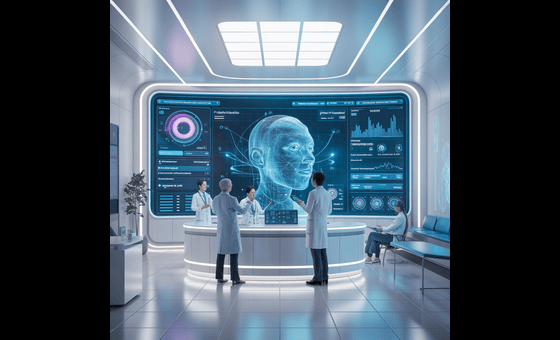
As we navigate through 2026, artificial intelligence has matured from experimental technology to mission-critical infrastructure. Healthcare marketers are leveraging AI across multiple touchpoints to create seamless patient journeys, from initial awareness through treatment and long-term care management.
The integration of AI into marketing operations has enabled healthcare organizations to process vast amounts of patient data while maintaining strict HIPAA compliance. Machine learning algorithms now analyze patient behaviors, preferences, and health patterns to deliver highly targeted messaging that resonates with specific audience segments.
Healthcare providers who have embraced AI-powered marketing tools report significant improvements in key performance metrics. Campaign conversion rates have increased substantially, patient acquisition costs have decreased, and overall return on marketing investment has reached new heights.
AI-Powered Personalization at Scale
One of the most significant impacts of artificial intelligence in healthcare marketing is the ability to deliver personalized experiences to thousands or even millions of patients simultaneously. Gone are the days of one-size-fits-all marketing messages that fail to connect with diverse patient populations.
Modern AI systems analyze patient demographics, medical history, browsing behavior, and engagement patterns to create individualized content recommendations. When a patient visits a healthcare website, AI algorithms instantly determine which services, educational content, or appointment options are most relevant to their specific needs.
Email marketing campaigns have been revolutionized through AI-driven personalization. Healthcare marketers can now send tailored messages based on patient health conditions, appointment histories, and predicted healthcare needs. This level of customization has led to dramatically higher open rates, click-through rates, and appointment bookings.
Predictive Analytics and Patient Journey Mapping

Artificial intelligence has transformed how healthcare marketers understand and predict patient behavior. Predictive analytics tools use machine learning to identify patterns in patient data, enabling marketers to anticipate healthcare needs before patients themselves recognize them.
These predictive models analyze factors such as age, medical history, seasonal health trends, and lifestyle indicators to forecast when patients might need specific services. For example, AI can identify patients who are likely to skip preventive care appointments and trigger automated outreach campaigns to encourage scheduling.
Patient journey mapping has become far more sophisticated with AI integration. Healthcare marketers can now visualize complete patient pathways across multiple touchpoints, identifying friction points where patients drop off and opportunities to enhance engagement.
Content Creation and Optimization
Artificial intelligence has become an invaluable partner in healthcare content creation and optimization. AI-powered tools assist marketers in generating blog posts, social media content, email campaigns, and website copy that aligns with brand voice while addressing patient needs and search intent.
Natural language processing capabilities enable AI systems to analyze top-performing healthcare content across the internet, identifying topics, formats, and messaging strategies that resonate with target audiences. This intelligence informs content strategies that are more likely to achieve engagement and conversion goals.
Search engine optimization has been enhanced through AI-driven keyword research and content optimization. Machine learning algorithms analyze search patterns, user intent, and ranking factors to recommend content improvements that boost organic visibility. Healthcare marketers can now identify content gaps and opportunities with unprecedented precision.
Chatbots and Conversational AI

Conversational AI has become a cornerstone of patient engagement strategies in 2026. Sophisticated chatbots powered by natural language processing now handle everything from appointment scheduling to symptom assessment, providing 24/7 support that enhances patient satisfaction while reducing administrative burden.
Modern healthcare chatbots have evolved far beyond simple rule-based systems. They understand context, remember previous conversations, and can handle complex multi-turn dialogues. Patients can ask questions about symptoms, insurance coverage, facility locations, and treatment options, receiving accurate, helpful responses instantly.
The integration of chatbots with electronic health records and practice management systems has created seamless patient experiences. Patients can check test results, request prescription refills, and update personal information through conversational interfaces that feel natural and intuitive.
Programmatic Advertising and Media Buying
Artificial intelligence has revolutionized how healthcare organizations approach paid advertising. Programmatic advertising platforms use machine learning to automate media buying, targeting the right audiences at the right time with the right message across multiple channels.
AI-powered advertising systems analyze millions of data points to identify high-value patient segments and optimize bidding strategies in real-time. This dynamic approach ensures marketing budgets are allocated to channels and audiences that deliver the best return on investment.
Healthcare marketers can now target patients with surgical precision based on factors such as health conditions, life events, geographic location, and online behavior. AI algorithms continuously refine audience segments based on campaign performance, automatically shifting resources to the most profitable opportunities.
Enhanced Data Analytics and Reporting

Data analytics capabilities have reached new levels of sophistication with AI integration. Healthcare marketers now have access to advanced analytics platforms that transform raw data into actionable insights without requiring extensive technical expertise.
AI-powered dashboards automatically surface the most important trends, anomalies, and opportunities hidden within marketing data. Rather than spending hours creating reports, marketers can ask natural language questions and receive instant visualizations and recommendations.
Predictive reporting has become standard practice. AI systems forecast future campaign performance based on historical data and current trends, enabling marketers to make proactive adjustments before problems arise.
Marketing Automation and Workflow Optimization
Marketing automation has been supercharged by artificial intelligence, enabling healthcare organizations to execute sophisticated multi-channel campaigns with minimal manual intervention. AI systems orchestrate patient communications across email, SMS, social media, and direct mail based on behavioral triggers and engagement patterns.
Lead scoring has become far more accurate with machine learning algorithms that continuously learn which patient characteristics and behaviors indicate high conversion probability. Marketing and sales teams can prioritize outreach efforts on prospects most likely to schedule appointments and become long-term patients.
The integration of AI with customer relationship management systems has created unified patient profiles that inform every marketing interaction. Healthcare marketers have complete visibility into patient histories, preferences, and engagement patterns, enabling more strategic and effective communication.
Ethical Considerations and Privacy Compliance

As artificial intelligence becomes more prevalent in healthcare marketing, ethical considerations and privacy compliance have moved to the forefront of strategic planning. Healthcare organizations must balance the benefits of AI-driven personalization with patient privacy rights and regulatory requirements.
HIPAA compliance remains paramount when implementing AI marketing technologies. Healthcare marketers must ensure that AI systems handle protected health information appropriately, with robust security measures and proper consent management. Transparency about how patient data is used has become a competitive differentiator.
Algorithmic bias presents another important consideration. AI systems trained on non-representative data sets can perpetuate healthcare disparities by targeting certain patient populations while excluding others. Healthcare marketers must actively monitor AI outputs for bias and take corrective action when inequities are detected.
The ROI of AI in Healthcare Marketing
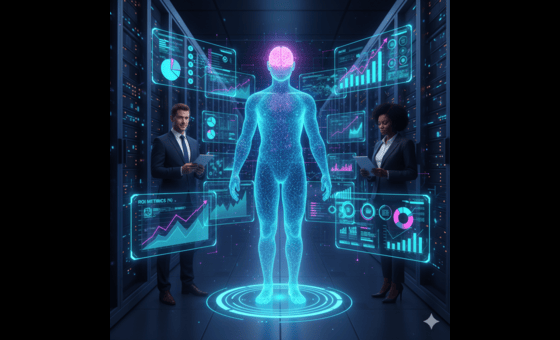
Healthcare organizations that have invested in AI-powered marketing technologies are seeing substantial returns on investment. Campaign efficiency has improved dramatically as AI systems automate repetitive tasks and optimize performance continuously.
Patient acquisition costs have decreased significantly for early AI adopters. The ability to target high-value patients with precision and personalize messaging throughout the patient journey has improved conversion rates while reducing wasted ad spend on unlikely prospects.
Patient lifetime value has increased as AI-driven engagement strategies improve retention and encourage utilization of additional healthcare services. The competitive advantage gained through AI adoption has proven difficult for laggards to overcome.
Implementing AI in Your Healthcare Marketing Strategy
Healthcare organizations looking to leverage artificial intelligence in their marketing efforts should approach implementation strategically. Start by identifying specific pain points or opportunities where AI can deliver meaningful impact rather than attempting wholesale transformation overnight.
Building internal AI literacy is essential for successful implementation. Marketing teams need training on how to work effectively with AI tools, interpret their outputs, and make strategic decisions based on AI-generated insights.
Selecting the right AI technologies requires careful evaluation of vendor capabilities, integration requirements, and total cost of ownership. Healthcare marketers should prioritize solutions that address their specific needs while fitting within existing technology ecosystems and budget constraints.
Conclusion
Artificial intelligence has fundamentally transformed healthcare marketing in 2026, enabling unprecedented levels of personalization, efficiency, and effectiveness. Healthcare organizations that embrace AI technologies position themselves for sustained competitive advantage in an increasingly digital landscape. The future of healthcare marketing is intelligent, personalized, and data-driven, with AI empowering marketers to connect with patients in more meaningful ways than ever before.
Frequently Asked Questions
What is AI in healthcare marketing?
AI in healthcare marketing uses technologies like machine learning and natural language processing to improve marketing effectiveness through personalized communications, campaign optimization, task automation, and data-driven decision-making.
How does AI personalize healthcare marketing?
AI analyzes patient data including demographics, medical history, and browsing behavior to deliver customized content, treatment recommendations, and communication timing that resonates with individual patients at scale.
Is AI marketing HIPAA compliant?
AI marketing can be HIPAA compliant when implemented with appropriate security measures, data handling protocols, and patient consent management. Healthcare organizations must work with HIPAA-compliant AI vendors.
What are the benefits of AI in healthcare marketing?
Key benefits include improved patient targeting, reduced acquisition costs, increased conversion rates, enhanced engagement and retention, automated workflows, predictive analytics, better ROI measurement, and competitive advantage.
How much does AI marketing cost for healthcare organizations?
Costs vary from affordable subscription-based platforms starting at a few hundred dollars monthly to enterprise solutions requiring significant investment. Many organizations start with focused pilot projects.
Can small healthcare practices benefit from AI marketing?
Yes, many affordable AI platforms are designed for smaller organizations, offering automated appointment reminders, chatbots, email personalization, and basic predictive analytics to help small practices compete effectively.
What AI marketing tools should healthcare organizations use?
Essential tools include customer data platforms, marketing automation platforms with AI, chatbots for patient engagement, predictive analytics tools, content optimization platforms, and programmatic advertising solutions.
How does AI improve patient engagement?
AI improves engagement by delivering personalized content at optimal times, providing 24/7 chatbot support, predicting patient needs, personalizing digital experiences, and identifying at-risk patients needing additional outreach.
What are the risks of using AI in healthcare marketing?
Key risks include potential HIPAA violations, algorithmic bias, over-reliance on automation, data quality issues, patient privacy concerns, and implementation challenges that waste resources.
How do I get started with AI healthcare marketing?
Identify specific marketing challenges where AI could help, educate your team, evaluate AI platforms that fit your needs and budget, launch a focused pilot project, measure results, and expand successful initiatives.
Will AI replace healthcare marketers?
No, AI augments rather than replaces marketers. AI handles data analysis and automation while marketers focus on strategy, creativity, and relationship building. Success comes from combining human insight with AI efficiency.
How does AI help with healthcare content marketing?
AI identifies trending topics, suggests content ideas, optimizes for search engines, personalizes content recommendations, analyzes performance, and automates distribution across multiple channels.
What is predictive analytics in healthcare marketing?
Predictive analytics uses machine learning to forecast patient behavior based on historical patterns, enabling organizations to anticipate service needs, identify at-risk patients, and allocate marketing resources effectively.
How does AI improve healthcare advertising?
AI improves advertising through programmatic ad buying, precise audience targeting, dynamic creative optimization, smart budget allocation across channels, and attribution modeling that tracks complete patient journeys.
What data does AI need for healthcare marketing?
AI requires patient demographics, medical history, appointment records, browsing behavior, email engagement, social media interactions, and feedback. All data must be collected and used in HIPAA-compliant ways with proper consent.
