

|
HC Marketers
Getting your Trinity Audio player ready...
|
Introduction
Healthcare email marketing presents unique challenges that don’t exist in other industries. While businesses in most sectors can freely send promotional emails with minimal regulatory concern, healthcare organizations must navigate a complex web of federal regulations, privacy laws, and ethical considerations that govern every aspect of patient communication.
The Health Insurance Portability and Accountability Act (HIPAA) stands as the most significant regulatory framework affecting healthcare email marketing. Violations can result in penalties ranging from $100 to $50,000 per violation, with annual maximums reaching $1.5 million. Beyond financial consequences, HIPAA violations damage patient trust and organizational reputation in ways that can take years to repair.
This comprehensive guide walks you through building a healthcare email marketing strategy that drives results while maintaining full HIPAA compliance. Whether you’re marketing for hospitals, medical practices, pharmaceutical companies, or healthcare technology providers, understanding these compliance fundamentals is essential for sustainable growth.
Understanding HIPAA and Its Impact on Email Marketing

What is HIPAA?
The Health Insurance Portability and Accountability Act, enacted in 1996, establishes national standards for protecting sensitive patient health information. The Privacy Rule and Security Rule within HIPAA specifically govern how Protected Health Information (PHI) can be used, disclosed, and secured.
Protected Health Information includes any individually identifiable health information transmitted or maintained in any form or medium. This encompasses:
- Patient names combined with health conditions
- Treatment information
- Payment information for healthcare services
- Medical record numbers
- Health insurance information
- Biometric identifiers
- Any other health information that could identify an individual
Does HIPAA Apply to Your Email Marketing?
Not all healthcare email marketing falls under HIPAA regulations. Understanding whether you’re a covered entity or business associate determines your compliance obligations.
Covered Entities include:
- Healthcare providers (hospitals, clinics, physicians, psychologists, dentists, chiropractors, nursing homes, pharmacies)
- Health plans (health insurance companies, HMOs, company health plans, government healthcare programs)
- Healthcare clearinghouses (entities that process health information)
Business Associates include:
- Third-party administrators
- Billing companies
- Practice management companies
- Email service providers handling PHI
- Marketing agencies with access to PHI
When HIPAA Doesn’t Apply:
- Marketing emails to healthcare professionals about products or services
- B2B marketing targeting healthcare organizations
- General health information newsletters with no patient-specific data
- Promotional emails that don’t reference or utilize PHI
- Marketing communications from non-covered entities
The critical distinction: HIPAA applies when you’re using or disclosing PHI for marketing purposes. General health information or promotional content that doesn’t identify individuals or use patient data typically falls outside HIPAA’s scope.
Key HIPAA Requirements for Email Marketing
Authorization Requirements
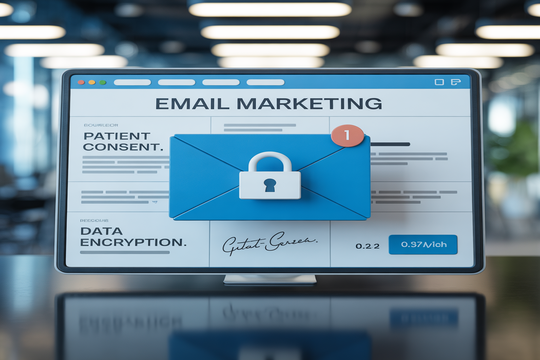
HIPAA requires specific authorization before using PHI for marketing communications. This goes beyond standard email opt-in consent.
Valid HIPAA authorization must include:
- Specific description of the information to be used or disclosed
- Names or identification of persons authorized to make the use or disclosure
- Names or identification of persons to whom the covered entity may make the disclosure
- Purpose of each requested use or disclosure
- Authorization expiration date or event
- Patient signature and date
- Right to revoke authorization in writing
- Statement that information may be redisclosed and no longer protected
- Statement that authorization is voluntary, and treatment cannot be conditioned on signing
Exception for treatment and healthcare operations: Marketing communications about your own healthcare services or products generally don’t require authorization if they fall under treatment or healthcare operations. However, this exception has specific limitations and doesn’t apply to communications for which you receive financial remuneration from third parties.
Minimum Necessary Standard
HIPAA’s minimum necessary requirement mandates using or disclosing only the minimum amount of PHI necessary to accomplish the intended purpose. For email marketing, this means:
- Limit data fields to what’s actually needed for segmentation
- Avoid including unnecessary health information in email content
- Restrict staff access to PHI based on role requirements
- Implement data minimization practices in your marketing database
Practical application: If you’re sending appointment reminders, include only the appointment date, time, and location—not diagnosis codes, treatment details, or insurance information unless specifically necessary.
Security Safeguards
The HIPAA Security Rule requires administrative, physical, and technical safeguards to protect PHI transmitted via email.
Administrative safeguards:
- Designate a security officer
- Conduct risk assessments
- Implement workforce training programs
- Establish security incident procedures
- Create contingency plans for data breaches
Technical safeguards:
- Use encryption for emails containing PHI
- Implement access controls and unique user identification
- Maintain audit logs of system activity
- Ensure automatic logoff from email marketing platforms
- Deploy transmission security measures
Physical safeguards:
- Control facility access to systems storing PHI
- Implement workstation security policies
- Secure devices used for email marketing
- Establish media disposal protocols
Building Your Compliant Email Marketing Foundation

Step 1: Classify Your Email Marketing Activities
Start by categorizing your email campaigns based on whether they involve PHI:
Category A: No PHI Involved
- General health education newsletters
- B2B marketing to healthcare professionals
- Service announcements not referencing patient data
- Promotional content for general audiences
Category B: PHI Involved – Treatment/Operations
- Appointment reminders with patient names
- Post-visit follow-ups
- Care coordination communications
- Patient satisfaction surveys referencing specific care
Category C: PHI Involved – Marketing Requiring Authorization
- Third-party product promotions using patient data
- Communications receiving financial remuneration
- Marketing communications not directly related to treatment
Understanding these distinctions shapes your entire compliance strategy and determines which safeguards apply.
Step 2: Select HIPAA-Compliant Email Service Providers
Your email service provider (ESP) choice significantly impacts compliance. When handling PHI, your ESP becomes a business associate requiring a formal Business Associate Agreement (BAA).
Essential features for HIPAA-compliant ESPs:
- Willingness to sign a Business Associate Agreement
- End-to-end encryption capabilities
- Secure data storage and transmission
- Access controls and authentication
- Audit logging and monitoring
- Disaster recovery and data backup procedures
- Regular security assessments and updates
Popular HIPAA-compliant email platforms:
- Paubox (specializes in HIPAA-compliant email)
- MailChimp (with BAA and specific plan requirements)
- Constant Contact (Health Connect plan)
- SendGrid (Enterprise plan with BAA)
- Amazon SES (with proper configuration and BAA)
Red flags indicating non-compliance:
- Provider refuses to sign a BAA
- Lack of encryption options
- No audit trail capabilities
- Unclear data storage locations
- Insufficient security documentation
Step 3: Implement Proper Consent Mechanisms
Develop a comprehensive consent and authorization framework that addresses both marketing permissions and HIPAA requirements.
For PHI-based marketing campaigns: Create authorization forms that include all required HIPAA elements. These must be separate from general terms of service or consent for treatment. Patients must specifically authorize use of their information for marketing purposes.
For general marketing (no PHI): Standard email marketing consent is sufficient, but best practices include:
- Clear opt-in language explaining what subscribers will receive
- Transparency about email frequency and content types
- Easy unsubscribe mechanisms in every email
- Preference centers allowing subscribers to choose content types
- Double opt-in confirmation for added security
Documentation requirements: Maintain records of all authorizations and consents, including dates, specific permissions granted, and any subsequent revocations. These records must be accessible for audits and retained according to HIPAA’s minimum retention periods.
Step 4: Establish Data Security Protocols
Implement comprehensive security measures for all systems touching PHI in your email marketing operations.
Email encryption:
- Use TLS (Transport Layer Security) encryption for all email transmissions
- Implement end-to-end encryption for emails containing PHI
- Consider secure portal systems for highly sensitive communications
- Ensure mobile devices accessing email marketing systems use encryption
Access management:
- Implement role-based access controls limiting who can view PHI
- Require unique user credentials for all system access
- Enforce strong password policies (complexity, rotation, length)
- Enable multi-factor authentication wherever possible
- Immediately revoke access when employees leave or change roles
Data handling procedures:
- Establish clear protocols for exporting and importing data
- Prohibit downloading PHI to unsecured personal devices
- Implement secure file transfer protocols for data exchanges
- Create data retention and destruction policies
- Regular security awareness training for marketing staff
Creating Compliant Email Marketing Content

Writing Patient-Centered Emails Without PHI
Most effective healthcare email marketing can be accomplished without using PHI at all. Focus on valuable health information, service awareness, and patient education.
Content strategies that avoid PHI:
- Seasonal health tips and preventive care reminders
- Educational content about conditions and treatments
- Facility updates and new service announcements
- Provider spotlights and expertise highlights
- Community health event promotions
- General wellness and lifestyle content
Personalization without PHI: Use demographic and behavioral data that doesn’t constitute PHI:
- Geographic location
- Age ranges (without exact birthdates)
- General interests indicated through website behavior
- Email engagement patterns
- Content preferences selected by subscribers
Example compliant personalization: “As a [City] resident interested in cardiac health, you might appreciate our new heart health screening program” rather than “Based on your recent cardiac consultation, we recommend…”
Segmentation Strategies That Maintain Compliance
Effective targeting doesn’t require compromising compliance. Develop segmentation strategies based on non-PHI data points.
Compliant segmentation approaches:
- Geographic location and service area
- Self-identified health interests from preference centers
- Engagement level with previous emails
- Website behavior and content consumption
- General demographic categories
- Subscriber source (website form, event, referral)
- Email domain (for B2B healthcare marketing)
Prohibited segmentation in marketing without authorization:
- Diagnosis codes or health conditions from medical records
- Treatment histories or procedures received
- Prescription information
- Insurance coverage details
- Lab results or clinical outcomes
Middle ground – verified patient lists: For appointment reminders and care-related communications that fall under treatment or healthcare operations, you can use patient status for segmentation, but content should still minimize unnecessary PHI disclosure.
Subject Lines and Preview Text Best Practices
Email subject lines and preview text are particularly sensitive because they may be visible on device lock screens, in email previews, and to anyone glancing at a recipient’s inbox.
Never include in subject lines or preview text:
- Patient health conditions or diagnoses
- Treatment information
- Appointment reasons or specialties that reveal health status
- Medication names
- Test results or clinical information
Safe subject line approaches:
- “Your appointment reminder from [Facility Name]”
- “Important health information from your care team”
- “Healthcare tips for [Season/Month]”
- “Updates from [Provider/Practice Name]”
- “Caring for your health: [General Topic]”
Risk: Even provider specialty can reveal health information “Reminder: Your oncology appointment” discloses that the recipient is seeing an oncologist, which reveals health information. Better: “Reminder: Your upcoming appointment.”
Compliance Checkpoints for Every Campaign
Pre-Launch Compliance Review
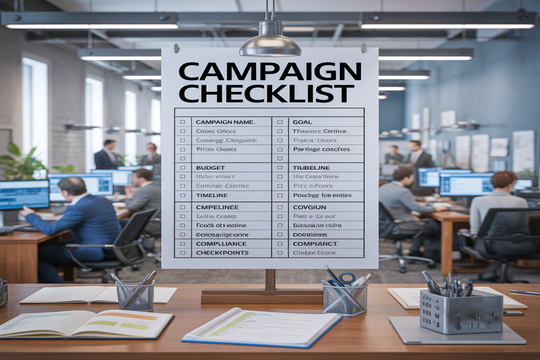
Before sending any healthcare email campaign, conduct a systematic compliance check:
PHI Assessment: ☐ Does this email contain any PHI? ☐ If yes, do we have proper authorization? ☐ Is the PHI use necessary, or can we accomplish goals without it? ☐ Have we minimized PHI to the lowest amount necessary?
Security Verification: ☐ Is the email platform HIPAA-compliant with current BAA? ☐ Are encryption measures activated? ☐ Have access controls been properly configured? ☐ Are audit logs enabled and monitored?
Content Review: ☐ Subject line free of PHI or revealing health information? ☐ Preview text appropriate and compliant? ☐ Body content minimizes or eliminates PHI? ☐ Unsubscribe mechanism clearly visible and functional? ☐ Privacy policy linked and current?
Authorization Check: ☐ All recipients properly consented/authorized? ☐ Consent records up-to-date and accessible? ☐ Opt-outs and revocations processed?
Ongoing Monitoring and Documentation
Compliance is not a one-time achievement but an ongoing commitment requiring continuous monitoring.
Regular compliance activities:
- Monthly review of consent and authorization records
- Quarterly security audits of email marketing systems
- Ongoing staff training on HIPAA requirements
- Immediate incident response protocols for suspected breaches
- Annual comprehensive risk assessments
- Documentation of all compliance activities and decisions
Metrics to monitor:
- Unsubscribe rates by campaign type
- Complaints received about email communications
- Security incidents or access violations
- Staff training completion rates
- Time to process opt-out requests
Handling Special Situations
Appointment Reminders and Transactional Emails
Appointment reminders and care-related communications occupy a gray area between pure marketing and healthcare operations.
Best practices for appointment reminders:
- Keep content minimal (date, time, location, contact information)
- Avoid mentioning appointment reason, provider specialty, or health conditions
- Offer secure portal access for detailed appointment information
- Allow patients to choose communication preferences (email, text, phone)
- Include only essential information in the initial reminder
- Use secure methods for any follow-up requiring health details
Transactional emails that are typically compliant:
- Portal registration confirmations
- Password reset emails
- Billing statements (sent securely)
- Insurance verification requests
- Prescription ready notifications (without medication details)
Marketing to Healthcare Professionals vs. Patients
B2B healthcare marketing targeting providers, administrators, and healthcare organizations operates under different rules than patient-focused marketing.
Healthcare professional marketing (B2B) typically doesn’t involve PHI:
- Product information for medical devices or pharmaceuticals
- CME opportunities and educational content
- Practice management solutions
- Clinical research participation invitations
- Conference and event promotions
Key difference: Even though you’re marketing to healthcare professionals, if you’re using patient data from their practices to target them, you may still be subject to HIPAA. Context and data sources matter.
When targeting providers becomes complex: If you’re marketing based on their prescribing patterns, patient populations, or treatment approaches derived from patient records, those data sources may be PHI requiring proper authorization and handling.
Working with Third-Party Vendors
Many healthcare organizations work with marketing agencies, consultants, and technology vendors who may access PHI.
Business Associate Agreement requirements: Any vendor with access to PHI on your behalf must sign a BAA that:
- Defines permitted and required uses of PHI
- Requires appropriate safeguards
- Prohibits unauthorized use or disclosure
- Requires reporting of security incidents
- Establishes data return or destruction procedures upon termination
- Allows for compliance monitoring
Vendor due diligence: Before engaging any marketing vendor:
- Assess their HIPAA compliance experience and capabilities
- Review their security measures and infrastructure
- Verify willingness to sign a comprehensive BAA
- Establish clear data handling protocols
- Define incident response procedures
- Clarify liability and indemnification terms
Building a Culture of Compliance

Staff Training and Awareness
Compliance failures often result from human error rather than system failures. Comprehensive staff training is essential.
Training program essentials:
- Initial HIPAA training for all staff handling PHI or email marketing
- Role-specific training for marketing team members
- Annual refresher training for all personnel
- Incident-based training when issues arise
- Documentation of all training activities
- Competency assessments and knowledge checks
Topics to cover:
- HIPAA basics and why it matters
- What constitutes PHI
- Authorization and consent requirements
- Security protocols and best practices
- Incident reporting procedures
- Real-world examples and case studies
- Consequences of violations
Incident Response Planning
Despite best efforts, incidents may occur. Having a response plan minimizes damage and demonstrates compliance commitment.
Incident response framework:
- Detection and Reporting: Establish clear channels for reporting suspected breaches or violations
- Assessment: Quickly evaluate the scope, severity, and potential harm
- Containment: Immediately stop unauthorized access or disclosure
- Investigation: Determine root cause and affected individuals
- Notification: Report to required parties (HHS, affected individuals, potentially media)
- Remediation: Implement corrective actions and prevent recurrence
- Documentation: Record all steps taken and lessons learned
Breach notification requirements: HIPAA requires notification within 60 days of discovering a breach affecting 500 or more individuals. Smaller breaches must be reported annually. State laws may impose additional requirements.
Common Compliance Mistakes to Avoid
Mistake 1: Assuming All Healthcare Marketing Requires HIPAA Compliance
Not all healthcare-related email marketing involves PHI. Many organizations over-restrict their marketing unnecessarily, missing opportunities to engage audiences effectively.
Reality check: If you’re sending general health information newsletters, promoting services to the public, or conducting B2B marketing to healthcare professionals without using patient data, standard email marketing compliance (CAN-SPAM) likely suffices.
Mistake 2: Overlooking Business Associate Agreements
Using email service providers, marketing automation platforms, or analytics tools without proper BAAs creates significant liability.
The risk: If a vendor experiences a data breach affecting PHI you’ve shared, you remain liable for the violation even though the breach occurred at the vendor level. BAAs contractually require vendors to maintain appropriate safeguards and share liability.
Mistake 3: Inadequate Consent Documentation
Relying on verbal consent, ambiguous opt-in forms, or outdated authorizations creates compliance gaps.
Best practice: Maintain detailed records showing exactly what each patient authorized, when they authorized it, and any subsequent changes to that authorization. Digital consent management systems can streamline this process.
Mistake 4: Ignoring Mobile Security
Healthcare staff increasingly access email marketing systems from mobile devices, creating security vulnerabilities if not properly managed.
Mobile security requirements:
- Device encryption enabled
- Strong authentication required
- Remote wipe capabilities for lost/stolen devices
- Restrictions on downloading PHI to personal devices
- Mobile device management (MDM) solutions for organizational devices
Mistake 5: Forgetting About Data Retention and Disposal
HIPAA requires retaining certain records for six years from creation or last effective date. Conversely, keeping data longer than necessary increases breach risk.
Data lifecycle management:
- Establish retention schedules aligned with HIPAA requirements
- Implement secure disposal procedures for electronic and physical media
- Regularly purge outdated or unnecessary PHI
- Document destruction activities
- Balance retention requirements with data minimization principles
Measuring Success While Maintaining Compliance

Compliant Email Marketing Metrics
Track campaign performance using metrics that don’t compromise patient privacy:
Safe metrics to monitor:
- Overall open rates (without patient-level detail)
- Click-through rates for content categories
- Conversion rates for desired actions
- Unsubscribe and bounce rates
- Email client and device usage
- Geographic engagement patterns
- Time-based engagement trends
Metrics requiring careful handling:
- Individual-level engagement data
- Patient journey mapping across touchpoints
- Attribution connecting email engagement to healthcare visits
- Predictive analytics using health data
The distinction: Aggregate, de-identified analytics are typically fine. Individual tracking that could be connected back to health information requires careful HIPAA consideration.
ROI Measurement for Compliant Campaigns
Demonstrate email marketing value without violating privacy:
Attribution approaches:
- Survey new patients about how they found your practice
- Use unique phone numbers or URLs in emails to track response
- Implement privacy-respecting analytics platforms
- Track aggregate conversions rather than individual paths
- Compare campaign periods to baseline performance
Key performance indicators:
- Cost per new patient acquisition
- Email-influenced appointment volume
- Service line awareness and interest
- Patient satisfaction and retention rates
- Community engagement and brand awareness
Future-Proofing Your Compliance Strategy

Staying Current with Regulatory Changes
Healthcare privacy regulations continue evolving. Stay informed about changes that might affect your email marketing:
Information sources:
- HHS Office for Civil Rights (OCR) guidance and updates
- Healthcare Information and Management Systems Society (HIMSS)
- American Health Information Management Association (AHIMA)
- Healthcare compliance consultants and legal advisors
- Industry conferences and webinars
- Professional associations in your healthcare sector
Recent and emerging considerations:
- State privacy laws (CCPA, CPRA, and others) that may impose additional requirements
- FTC Health Breach Notification Rule expansions
- Telemedicine and digital health privacy considerations
- AI and machine learning applications in healthcare marketing
- Cross-border data transfer restrictions
Balancing Innovation with Compliance
As healthcare marketing evolves with new technologies and approaches, maintain compliance while staying competitive:
Emerging technologies to watch:
- AI-powered personalization and content optimization
- Predictive analytics for patient engagement
- Chatbots and conversational marketing
- Marketing automation and patient journey orchestration
- Advanced segmentation using machine learning
Compliance integration strategy:
- Assess new technology against HIPAA requirements before implementation
- Conduct privacy impact assessments for new initiatives
- Ensure vendors sign appropriate agreements
- Implement privacy-by-design principles
- Start with de-identified or non-PHI applications
- Scale responsibly as compliance frameworks solidify
Conclusion
Building a compliant healthcare email marketing strategy requires balancing regulatory requirements with marketing effectiveness, but HIPAA compliance doesn’t have to stifle creativity or limit patient engagement. The key is understanding when HIPAA applies, implementing appropriate safeguards for PHI, selecting HIPAA-compliant technology partners with proper BAAs, and recognizing that impactful healthcare marketing can often be accomplished without using protected health information at all. Success comes from ongoing staff training, regular security audits, comprehensive documentation, and a culture that prioritizes patient privacy alongside marketing goals. By following the strategies outlined in this guide, healthcare organizations can develop email marketing programs that drive engagement, support business objectives, and maintain the trust fundamental to the patient-provider relationship. Remember that compliance is not a destination but an ongoing journey—stay informed about regulatory changes, continuously improve your processes, and never compromise on the privacy and security that patients deserve.
Frequently Asked Questions
1. Do I need a Business Associate Agreement (BAA) with my email service provider?
A BAA is required only if emails contain PHI. For general marketing or educational emails without patient data, a BAA is usually not necessary, though some organizations choose one for added protection.
2. Can appointment reminders be sent via email under HIPAA?
Yes, as long as the email includes only basic details like date, time, and location. Avoid medical details and offer secure alternatives for privacy-conscious patients.
3. What should I do if PHI is emailed to the wrong recipient?
Treat it as a potential breach: stop transmission, document the incident, notify compliance leadership, and report if required under HIPAA timelines.
4. How is healthcare email marketing different from other industries?
Healthcare marketing must comply with HIPAA in addition to CAN-SPAM, requiring stricter controls, encryption, authorizations, and higher penalties for violations.
5. Can patient testimonials be used in healthcare email marketing?
Yes, with explicit written authorization for marketing use. Alternatively, use de-identified or non-patient (actor-based) testimonials.
